
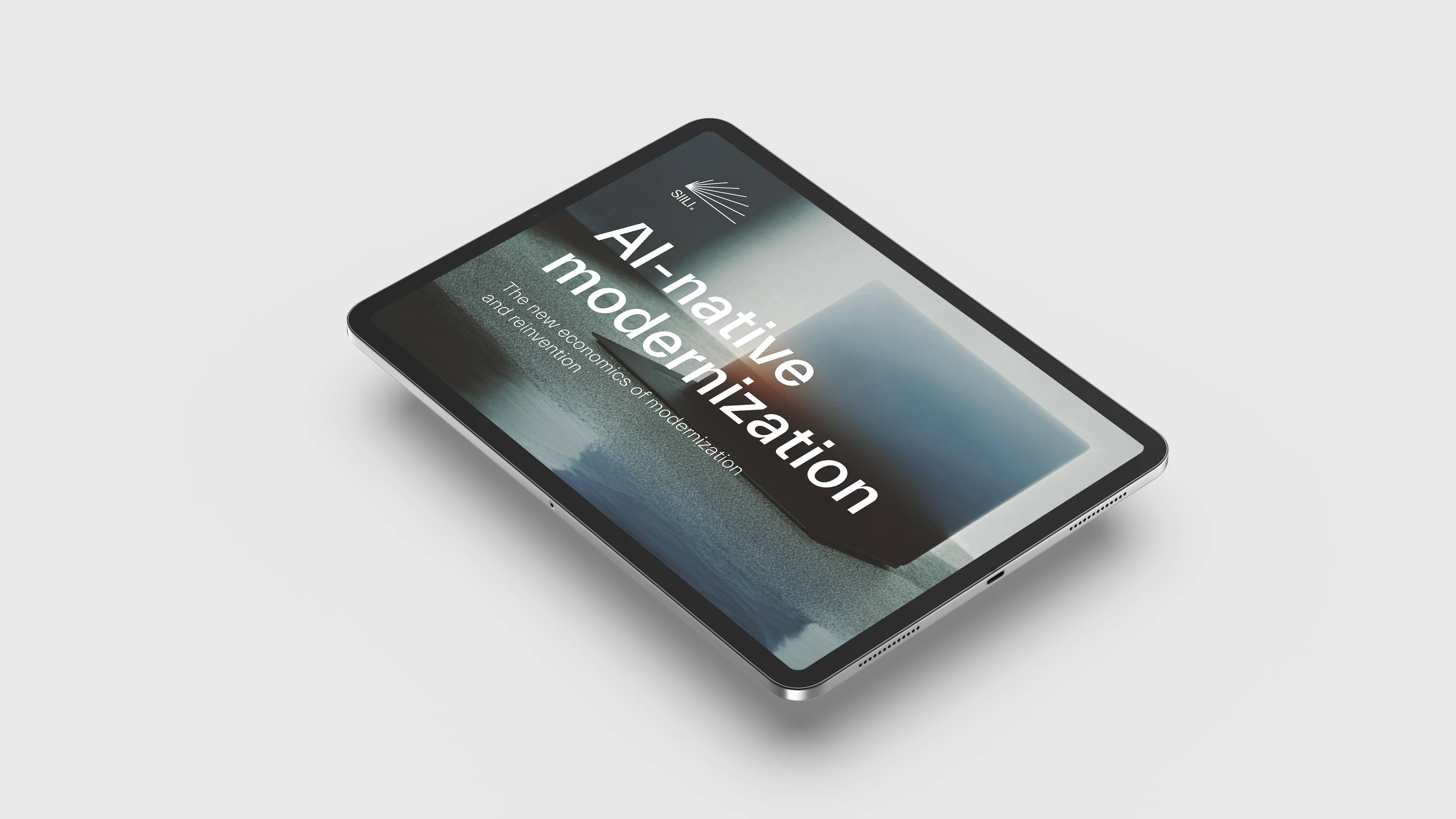
SIILI GUIDEBOOK
AI-native modernization
The new economics of enterprise reinvention
Legacy modernization has usually been deferred for good reasons. Those reasons no longer hold.
For years, modernization has been something organizations postponed to “next year”. The costs felt too high, the risks too difficult to justify, and the business case too unclear.
AI-native modernization changes the economics entirely.
In this guidebook, we explore how AI-powered analysis, specification-driven workflows, and agentic delivery models are helping organizations modernize legacy systems faster, with less uncertainty and better visibility into what truly matters.
The result is not just lower maintenance costs or safer systems. It’s the ability to continuously evolve the digital core of the business and create room for new opportunities.
Fill in the form and get the guidebook to learn how organizations can move from reactive legacy maintenance toward AI-native reinvention.
→ Legacy systems are consuming most IT capacity
Mature enterprises spend 60–80% of IT budgets maintaining existing systems instead of building new business capabilities.
→ AI changes the most expensive phase of modernization
The biggest gains come from faster legacy analysis, business rule extraction, dependency mapping, and documentation — reducing uncertainty before implementation even begins.
→ Incremental modernization outperforms big-bang transformation
AI-native modernization works best through smaller, measurable modernization slices that reduce risk while delivering value continuously.
→ Organizational readiness matters more than tooling
AI amplifies existing ways of working. Organizations with clear governance, strong platforms, and decision-making processes gain the most value from AI-native modernization.
What to expect
This guidebook offers a practical view into how AI-native modernization is reshaping enterprise transformation. You’ll learn how organizations can reduce modernization risk, improve changeability, and move from costly legacy maintenance toward continuous reinvention.
Inside, we explore real modernization workflows, organizational challenges, governance considerations, and practical ways to achieve measurable business value with AI-native methods.
Who should read this
AI-native modernization is no longer only a technical discussion. It impacts operating models, business agility, governance, and long-term competitiveness. This guidebook is designed for leaders who need to modernize critical systems while keeping delivery practical and measurable.
→ Technology leaders balancing risk and renewal
For CTOs, CIOs, and enterprise architects managing growing maintenance costs, technical debt, and modernization priorities across complex system landscapes.
→ Business and transformation decision-makers
For executives responsible for improving operational efficiency, enabling faster change, and creating room for new digital business opportunities.
→ Product and software development organizations
For teams exploring how AI-native workflows, specification-driven development, and agentic delivery models can improve modernization and software delivery.
→ Organizations preparing for AI-native operating models
For companies looking to understand how governance, platforms, organizational readiness, and AI-assisted workflows need to evolve together.